

Altamont Enterprise: Underground Railroad center gets $2M grant, still short because of withdrawn federal funds
ALBANY COUNTY — Paul and Mary Liz Stewart, founders of the not-for-profit Underground Railroad Education Center, learned this month that the center had received a $2,080,000 grant from the New York Council on the Arts to go towards building an interpretive center in Arbor Hill.
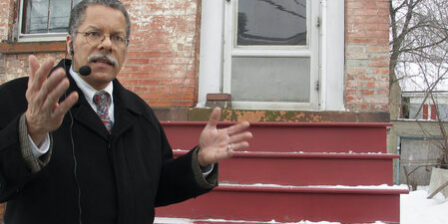
The center will stand near the restored brick rowhouse on Livingston Avenue where Black abolitionists Harriet and Stephen Myers once lived.
The news of the latest grant is bittersweet.
The Stewarts say they would have likely had enough to build the interpretive center, estimated to cost between $12 million to $15 million, if the Trump administration hadn’t pulled back promised federal funds.
The Stewarts have a suit pending, in an attempt to recoup federal funds, with a case conference this week.
Two different federal grants — from the Environmental Protection Agency and from the National Endowment for the Humanities — that together totaled just under $4 million were withdrawn.
Mary Liz Stewart said that two additional grants, each for $2 million, depended on having enough money committed. So, with the federal grants withdrawn, the Underground Railroad Education Center lost about $8 million, she said.
“The two pools of $2 million each would have been the last money in the door,” said Mary Liz Stewart.
With this month’s grant, the project now has about $7 million, Paul Stewart said, instead of having enough funds to begin construction.
Mary Liz Stewart said that the center had planned on hiring a number of small contractors for the project who were minority and women business enterprises, known as MWBE, which means they are owned by a woman or by someone from a minority group.
One of the companies the Stewarts worked with was the New World Barn Company based in Altamont, which salvaged timbers of a 1700s barn — from a farm where slaves had worked — to be used to build an entry to the modern center.
“We had a whole slew of subcontractors who were lined up, ready to go …,” she said. “So, while we, organizationally, have been impacted, so have these small businesses that now are just either sitting around waiting or they are obviously looking for other jobs as well. But there was a lot of excitement about these, particularly some of the smaller businesses.”
In announcing the grants — which totaled $82 million to 132 arts and culture facilities across the state — Council on the Arts Executive Director Erika Mallin said, “We know that when the arts flourish, communities follow — bringing energy, creating jobs, expanding accessibility, and increasing tourism. This grant program is a critical investment in our creative sector, empowering our creative community and inspiring innovation.”